Boosting career chances for employees of the financial institution with a recommendation system
Recommendation system
About the project
When the client approached us, they were struggling with a challenge related to their employees’ development. In simple terms, they were searching for a way to help their managers grow, advance in the company structure, or move between positions within the organization.
Back then, the process of choosing courses for their employees was conducted manually. It required a lot of decisions to be made both by the employee and by the manager of a chosen department. To automate this process, the client decided to build an AI-based platform that would recommend the right courses to support the development of their employees and make sure that it aligns with the company’s goals.
Our tasks

Building a Proof-of-Concept to prove value
Before implementing AI, we had to verify if our assumptions about AI performance within the system were right.

Tailoring the platform for different types of users
The AI-powered we planned to develop had to suggest courses not only to employees who wanted to climb the career ladder, but also for those who wanted to move between the positions within the organization.

Personalized courses suggestions with an AI-based platform
We decided to build the recommender system to help managers support company employees in making advances in their careers.
01
Challenges
1. Verifying the assumptions as soon as possible
2. Meeting the needs of different types of users
3. Understanding the current process of assigning the courses

Most exciting part of the AI involved, was to tackle diversity of offered content. Training materials for users are made in many different languages, and teaching about different problems. Whole project showed that, project should not only work flawlessly, but should look great !

Michał Trojnarski / AI Engineer
02
Solutions
1. Neoteric AI Sprint
2. Building predictive models
3. All-round approach
Even though the core of the project was about building and training predictive models that would recommend courses to employees, creating a good Proof of Concept required combining skills from different areas as well. In order to make sure that our Proof of Concept is scalable, we used serverless architecture for its backend part. As we wanted to provide the client with a usable platform, we involved a UI designer and a frontend developer to take care of the visual part of the project.
Technology we used

Angular

AWS

Azure

Python
03
Project Results

PoC built in less than 3 months
From the very beginning, it was important to validate the idea of implementing AI as quickly as possible. After the AI Sprint workshops, we agreed on the problem that we wanted to solve with predictive models and on the project scope. The next step was to deliver a product that would prove to be a solution to that problem that is worth investing in. The Proof of Concept that we’ve built using the data provided by the client has met their expectations, being able to suggest the right course recommendation for their employees. As the models can learn with every new data record they get, their suggestions are more and more accurate every day.
Hours saved by streamlining the process
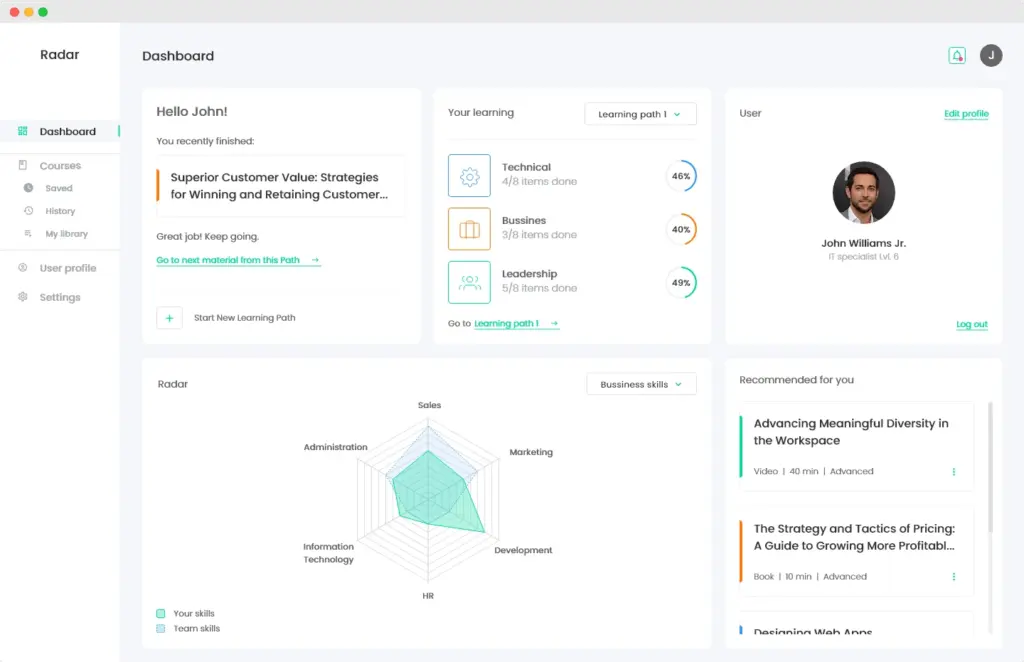
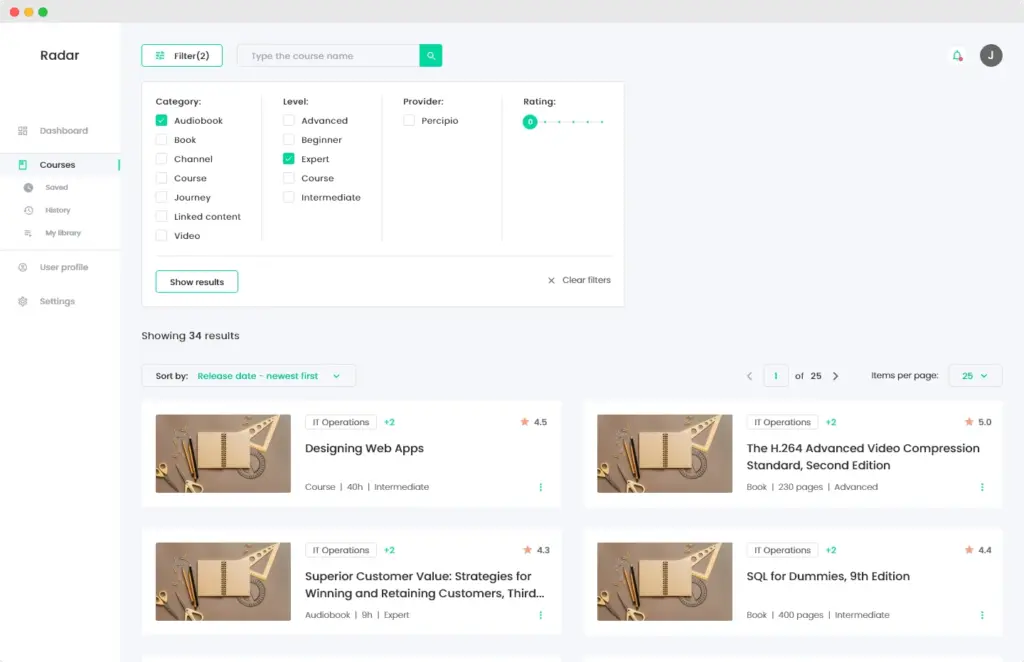
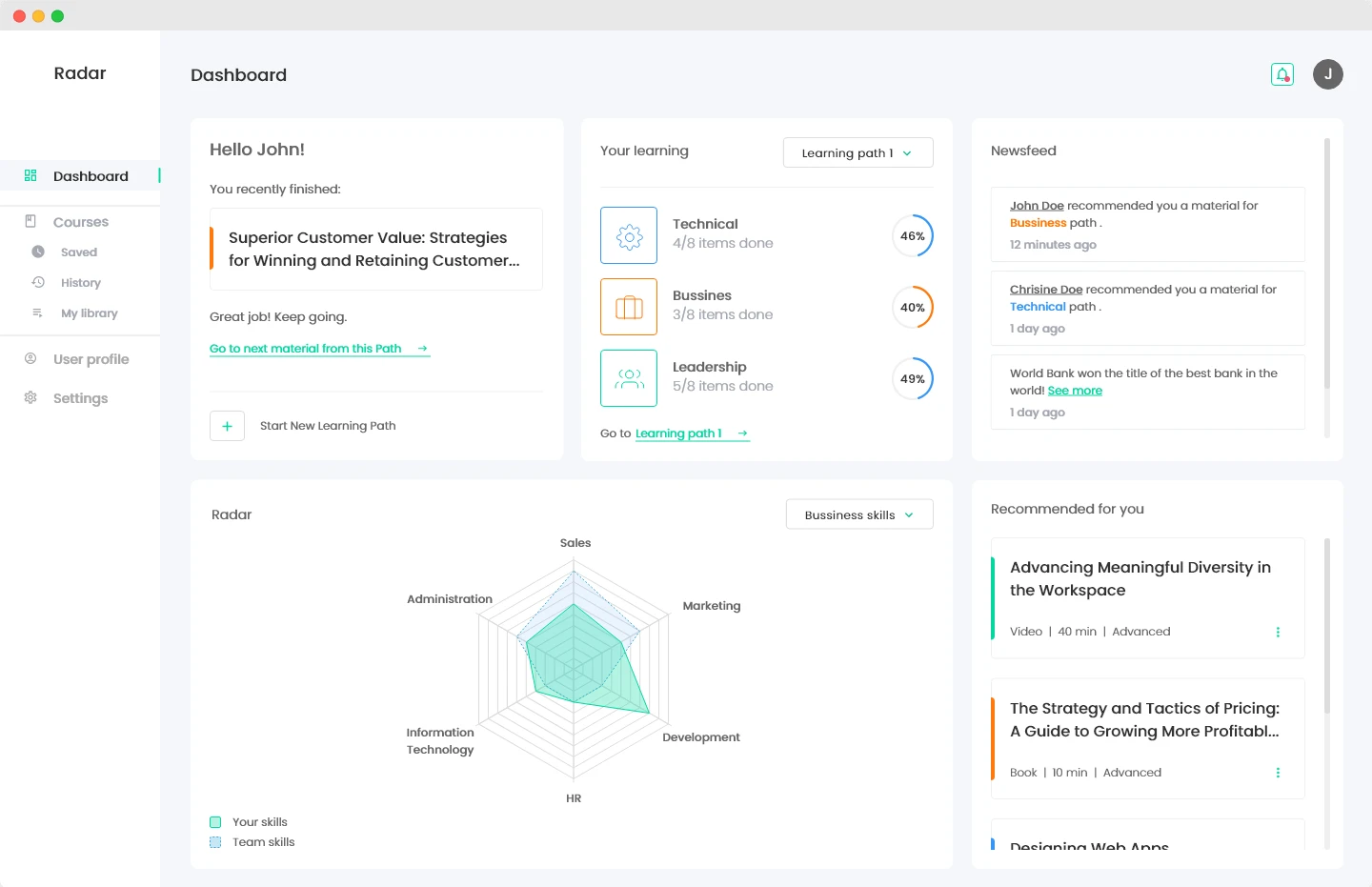
The platform was able to streamline the process that previously required a lot of decisions to be made both by the employee and by the manager of a chosen department. Now, the platform is able to suggest the right courses that would support managers in growing their dream teams and help employees advance their careers. The managers are able to see their teams’ development in a visual way and quickly assess what skills are missing, while employees get course suggestions as a clear list of recommendations – just like the way they get movies recommendations on Netflix.
Conclusion