The new chess experience: a platform handling hundreds of 4-players chess games online
Quaternity
About the project
When Quaternity approached us, they had an offline, physical version of the chess game and wanted to bring it online. We started with developing the back-end of the app, with a complex game engine at its heart. Later on, the whole front-end development was moved to Neoteric as well so we could take care of the platform development holistically.
Our tasks

Conducting R&D around the engine
There are many engines for 2-player chess online but no clear benchmarks when it comes to the 4-player games so everything had to be designed from scratch.

Backend development
The main task was to build a rules engine for Quaternity and a computer-based player following these rules.

Creating a computer player
At this stage, the bot is not expected to be a good player – just good enough to occupy a seat at the table following the engine rules. In the future, it will be possible to choose a player of a certain level.

Frontend development
As the engine is the heart of the platform, it’s the frontend part that lets the users play and interact with it. Based on the delivered designs, we created the user interface.
01
Challenges
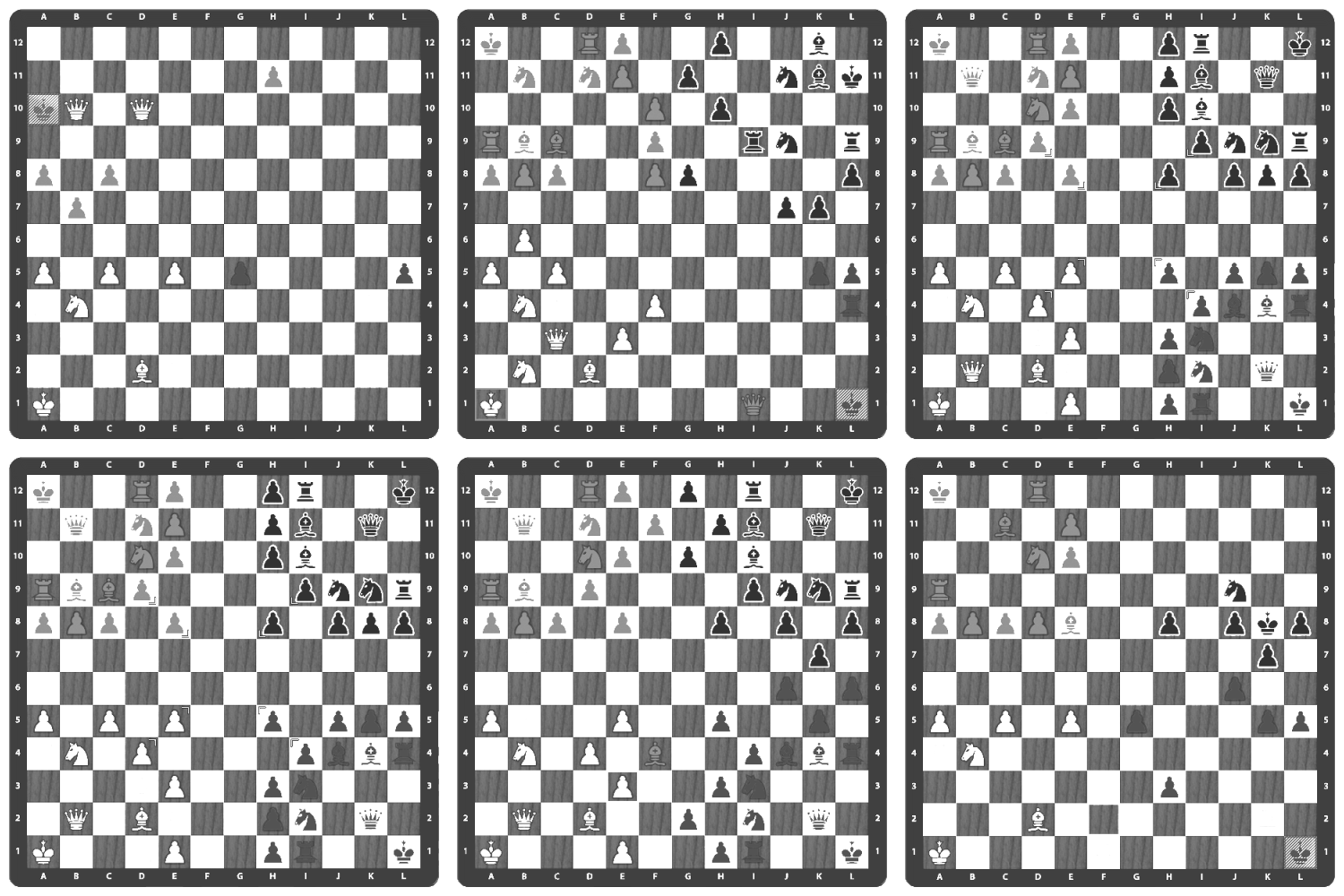
1. Lack of existing engines for 4-players chess
With no existing engines for 4-players chess, it was necessary to write everything from scratch. Every rule of the game had to be taken into account and validated by the engine. The engine was supposed to suggest the possible moves, prevent users from making forbidden moves, and keep control over the time and the order of the moves.
The bot – known as a computer player – also needed to follow these rules, making it possible to play the game even without having 4 real players as opponents.

2. Engine’s efficiency
In the case of an online game, it’s not enough for the engine to work based on the set of rules. It needs to do it almost in no time so the users don’t experience any lags. That’s why the engine’s performance and efficiency were of the highest priority. Our goal was to validate moves in less than 0.5 seconds.
3. Scalability
In order to support Quaternity’s business goals, the platform needed to scale to handle more games at the same time, with thousands of users playing simultaneously, and still keep high its performance and efficiency. The aim of the system was to be able to horizontally scale to 10k people.
4. Ensuring users’ engagement
One of the goals was to build a strong community of engaged users around Quaternity. In order to achieve this, we needed to provide users with different sorts of interactions – with real players who can be invited to join the game or with the bots – and enable running chess tournaments.

Neoteric is a critical player in this project. This project is in a complicated niche, and their team did extensive R&D for it. They're a trusted vendor who makes a significant impact.

Shreyas Kumar, Head of Product & Engineering, Quaternity
Source: Clutch.co
02
Solutions
1. Building an engine for 4-players chess from scratch
2. Autoscalable engine
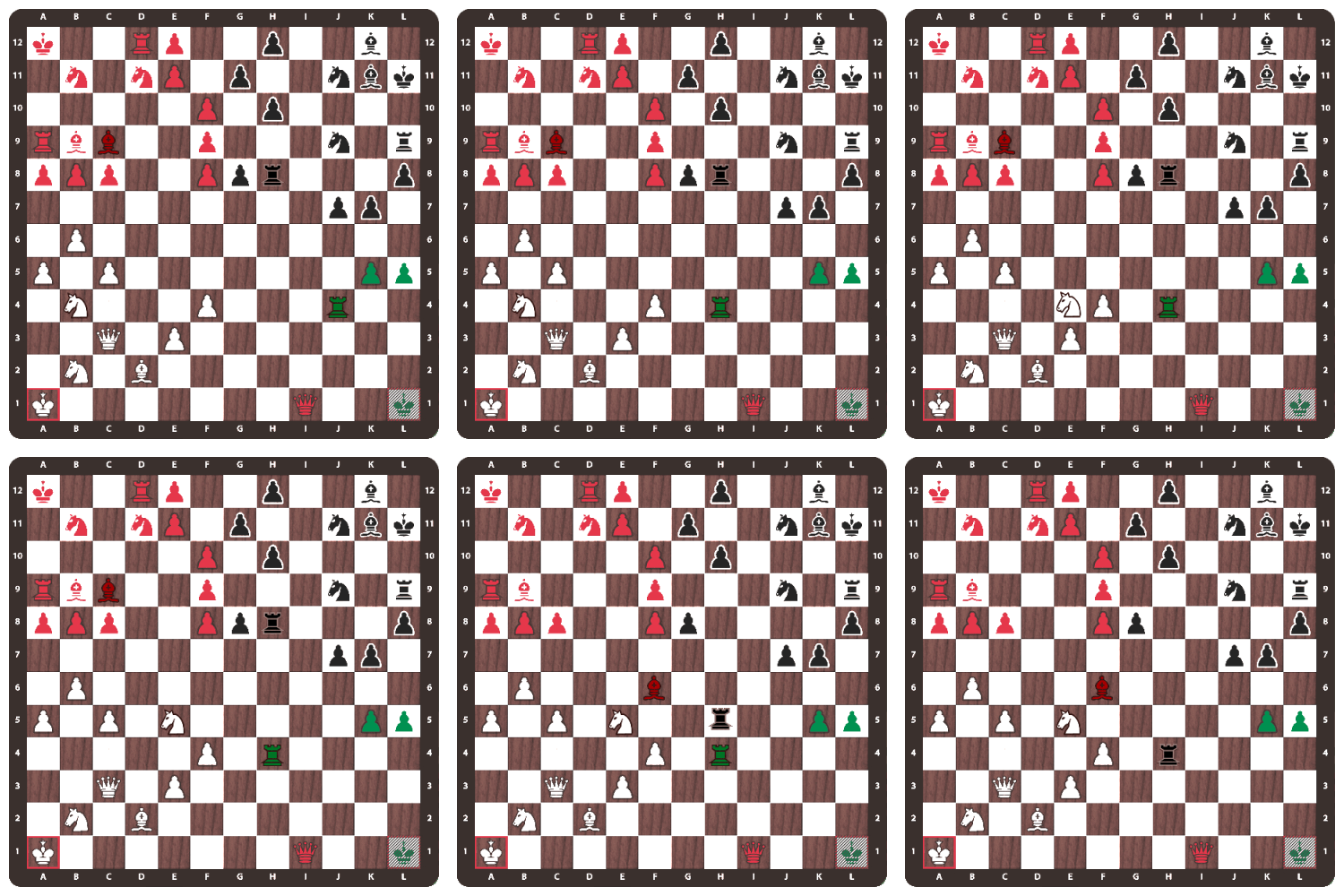
3. Testing the platform with early adopters
4. NFT-powered payments
Technology we used

Java

Spring

React

AWS
03
Project Results

Successful release and positive reception
The platform was already released and the feedback from users is positive. Among the players, there are even chess masters such as Alexander Morozevich – a Grandmaster, a two-time World Championship candidate, two-time Russian champion who has represented Russia in seven Chess Olympiads, winning numerous team and board medals. His Quaternity game stream was watched by over 4000 people.
High efficiency scores
The validation of moves responds in less than 0.5 seconds. With such a short engine response time, the users do not frustrate over the lags so they can fully focus on winning the game. What’s most important here, though, is that as we eliminated all the logical errors from the engine, the system itself does not affect the game and its final results.
Running chess tournaments
The first four-player chess tournaments have been already hosted on the Quaternity platform.
Conclusion